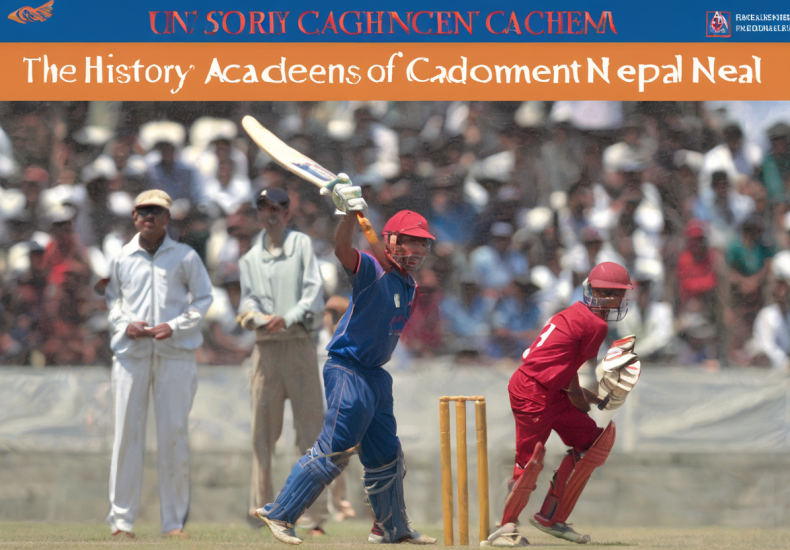
The Evolution of Cricket Academies in Nepal
Cricket, the gentleman’s game, has always been a popular sport in Nepal. However, it wasn’t until the late 1990s and early 2000s that the country saw a rise in the popularity of the sport. This led to the development of cricket academies, which have played a crucial role in not only promoting the game but also in nurturing the talent of young players.
One of the first cricket academies in Nepal was established in 1996 by the Nepal national team captain, Mr. Binod Das. Back then, the academy was a humble venture with limited resources, but it quickly gained recognition for producing some of the most promising young players in the country. In the early years, these academies focused on developing the technical skills of players and providing them with proper training and equipment. However, as the popularity of cricket continued to grow, the academies also expanded their scope to include things like physical fitness, mental conditioning, and even sports psychology.
Today, Nepal boasts several cricket academies, each with its unique training programs and facilities. Some of the well-known academies include the Tribhuvan University Cricket Ground and the Sagarmatha Cricket Academy, which have produced some of the best cricketing talents in the country. These academies not only offer training and guidance to talented players but also provide opportunities for them to showcase their skills in various local and international tournaments.
The development of cricket academies in Nepal has not only helped in the growth and success of the national team but has also opened doors for many young players to pursue a career in cricket. With their professional training and guidance, these academies have produced several players who have gone on to represent Nepal at the international level and make the country proud. As cricket continues to thrive in Nepal, the role of cricket academies remains crucial in shaping the future of Nepali cricket and producing talented players who can compete on the global stage.